
An approximate voter turnout of 59.06 per cent was recorded in the sixth phase of the Lok Sabha elections on Saturday in 58 constituencies across six states and two Union territories with the polling percentage in the Jangal Mahal region of West Bengal touching 78.19.

The RJD polled the highest vote share in Bihar, but it was not reflected in the number of seats it won.

The marathon polling process to elect the 18th Lok Sabha ended on Saturday with the seventh phase of elections witnessing an approximate voter turnout of 62.36 per cent, amid clashes between Trinamool Congress and Bharatiya Janata Party supporters in Sandeshkhali and some other parts of West Bengal.

A tormenting heatwave swept through North India on Sunday with the mercury crossing 49 degrees Celsius in pockets of Delhi, while the weather office forecast some relief Monday onwards.

The national capital battled weather conditions in the "red category" as the maximum temperature recorded at the Palam observatory was 46.1C,

The average temperatures observed pan-India for April was 35.05 degrees, which was the fourth highest in 122 years.

In Rajasthan, 13 deaths related to rain and storm were reported over the last two days while at least 12 people were killed due to lightning strikes in Jharkhand during the same period, officials said.

Voters include 8.4 crore men, 8.23 crore women and 11,371 from third gender. There are as many as 35.67 lakh first time voters, besides 3.51 crore young voters in the age group of 20-29 years.

'While every year presents new challenges, it also provides opportunities for better growth and performance.'

Meanwhile, Chief Medical Superintendent (CMS) of the district hospital, Dr Divakar Singh, was removed and sent to Azamgarh, allegedly after he made a careless remark about the cause of deaths.
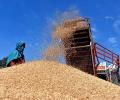
The government has no plans to import wheat as it has sufficient stocks to meet the country's requirements, official sources said. The Food Corporation of India (FCI) has enough stock for public distribution, they added. "There are no plans to import wheat into India. "The country has sufficient stocks to meet our domestic requirements," a source said.

The low-pressure area over the South Andaman Sea and adjoining southeast Bay of Bengal is very likely to move northwestwards and intensify into a depression by Saturday, the weather office said.
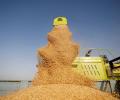
Temperatures in March will be critical to determining the impact of any unusual heatwave conditions on this year's wheat crop in North India. It is that time of the year when the crop enters its vital grain-filling stage, say meteorologists and crop experts. So far, the high day temperatures in the North are not believed to have any significant impact on the final yields since the crop hasn't entered a stage where heat affects yields.

Cooler weather meant that demand for milk products and value-added items like buttermilk and ice-cream did not show the usual rise.


In Phase 6, indications are that the BJP, which is defending 40 seats, will lose in double digits and gain in single digits. Not good, if you are the ruling party scrambling to earn a working majority, with just one phase left to go, argues Prem Panicker.

The Safdarjung Observatory, which provides representative data for the city, recorded a maximum temperature of 40.1 degrees Celsius, which was eight notches more than normal, said Kuldeep Srivastava, the head of the IMD's regional forecasting centre.

After a ban on wheat exports, India's cereal grain procurement for the central pool was struggling to rise significantly until the middle of last week, informed trade and market sources. Farmers have been holding on to their produce as the price of wheat in the open market recouped some of the losses it suffered in the aftermath of the ban. According to trade estimates, around 18.12 million tonnes (mt) of wheat was procured in the central pool up until May 18. Before the export ban was enforced on May 13, it was 17.96 mt.

India off-spinner Ravichandran Ashwin revealed he was in contention to play in the second Test against England at Lord's till a sudden spell of rain before the toss forced the team management to change the playing XI.

The Asian Development Bank (ADB) on Wednesday slashed India's GDP growth forecast for FY23 to 7 per cent from the earlier estimate of 7.2 per cent mainly on account of higher inflation and a tight monetary policy. India's economy grew 13.5 per cent year-on-year in the first quarter of 2022-23, reflecting strong growth in services, ADB said in its second supplement to Asian Development Outlook Report 2022 (ADO 2022). "However, GDP growth is revised down from ADO 2022's forecasts to 7 per cent for FY2022 (ending March 2023) and 7.2 per cent for FY2023 (ending March 2024) as price pressures are expected to adversely impact domestic consumption, and sluggish global demand and elevated oil prices will likely be a drag on net exports," ADB said.

Mumbai civic body took to Twitter to inform citizens about the do's and don'ts and asked them to "stay hydrated and safe".

Such weather conditions are not typical for May which tends to be the hottest month of the year in Delhi with a mean maximum temperature of 39.5 degrees Celsius.

Leading economists have pencilled in a high 13-15.7 per cent uptick in the economy in the first quarter of 2022-23 with an upward bias. Soumya Kanti Ghosh, the group chief economic adviser at State Bank of India, on Tuesday said he expects the GDP to clip past 15.7 per cent in the first quarter with more chances of the final numbers printing in higher, while Aditi Nayar, the chief economist at the rating agency Icra, said the economy will grow much lower at 13 per cent in the June quarter. The national statistical office will announce the first quarter GDP numbers later next week.

The mean maximum temperature for the month of March was 28.2 degrees Celsius in 2020 and 2019. It was 32.8 degrees Celsius in 2018; 30.7 degrees Celsius in 2017 and 31.5 degrees Celsius in 2016, according to the India Meteorological Department data.

The minister emphasised that India will play its due role in advancing global food security and it will do so in a manner in which it upholds equity, displays compassion, and promotes social justice.

India's jugalbandhi with coal and clean energy is coming unstuck, neither achieving adequate renewable generation nor ensuring sufficient coal-fired power in the quest to become a $5-trillion economy. Six months have elapsed since Prime Minister Narendra Modi announced an ambitious climate agenda for India at COP26 at Glasgow. The net zero emissions target by 2070 is a distant one, but there are nearer-term plans to meet 50 per cent of energy demand with renewables by 2030 by increasing capacity to 450 Gw. A cursory look at the balance sheet of India's climate progress since November reveals ponderous progress towards meeting the renewables target even as the country is scrambling to expand coal-fired generation in the face of a power crisis.

Senior IMD scientist R K Jenamani said the monsoon covered south and central Arabian Sea, entire Kerala, parts of Karnataka and Tamil Nadu between May 31 and June 7.

To prevent dehydration, drink plenty of water, natural fruit juices, or vegetable juice every day, suggests Dr Divya Gopal.

The paper said 65,130 people were killed in 3,175 incidents of floods. Some 40,358 people died in 117 tropical cyclones, with 344.9 deaths per mortality event. There were 706 heat wave incidents that claimed the lives of 17,362 people, the paper said, adding there is a rise in the number of casualties because of this type of EWE.
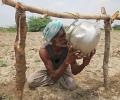
Santosh Patkar of Devgadh Taluka Sindhudurg district of Maharashtra is a worried man these days. Devgadh, which is known as the home to world famous Alphonso variety of mangoes, has seen an unusual drop in yields which is affecting farmers' income. Being one of the primary agricultural produce from the area, Santosh is not untouched by this somewhat rare phenomenon. He said in his own mango garden, yields have come down by a third from most trees.

In Delhi, Safdarjung, the base station for the national capital, recorded 44.2 degrees Celsius, while Mungeshpur observatory in northwest Delhi, reported 47.3 degrees Celsius.
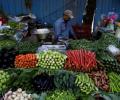
Retail inflation fell to a 15-month low of 5.66 per cent in March, mainly due to a decline in food prices, government data showed on Wednesday. The inflation figure in March is within the RBI's comfort zone as it is below 6 per cent. The retail inflation based on Consumer Price Index (CPI) was 6.44 per cent in February 2023 and 6.95 per cent in the year-ago period.

Gurugram in Haryana witnessed a scalding 48.1 degrees Celsius, the highest since May 10, 1966, when the city logged 49 degrees Celsius.

Mother Dairy hiked milk prices by Rs 2 per litre in the Delhi-NCR market effective Tuesday, citing an increase in its procurement rate of raw milk from producers. This is the fifth increase in milk prices since March, with the cumulative hike now totalling up to Rs 9 per litre, or 16 per cent, by Mother Dairy -- one of the leading milk suppliers in Delhi-NCR with volumes of more than 30 lakh litres per day. When contacted, R S Sodhi, MD of Gujarat Cooperative Milk Marketing Federation (GCMMF), which markets milk under Amul brand and is a major player in Delhi-NCR, said that there is no plan to increase its milk prices in the near future.

Panesar feels the concept of WTC is a great advertisement of Test cricket and the former spinner went on to term the summit clash as an encounter similar to arch-rivals India and Pakistan playing a Test match or the Ashes.

Parts of northern and western India reeled under scorching heat with temperatures hovering near the 50 degree-mark in Rajasthan, while the India Meteorological Department said no immediate respite is likely from the ongoing heatwave conditions.
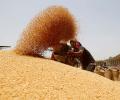
India's wheat production is projected to have declined nearly 3 per cent to 106.84 million tonnes while the overall foodgrain production is estimated to have touched record 315.72 million tonnes in the 2021-22 crop year. The wheat production is estimated to have declined due to heatwave that resulted in shrivelled grains in the northern states of Punjab and Haryana. Releasing the fourth advance estimate for the 2021-22 crop year, the Union agriculture ministry on Wednesday said a record output is also estimated for rice, maize, gram, pulses, rapeseed and mustard, oilseeds and sugarcane.

Large swathes of the country reeled under heatwave conditions on Tuesday with Churu in Rajasthan recording a high of 48 degree Celsius.

The rupee depreciated 6 paise to 77.50 against the US dollar in the opening trade on Wednesday as a surging American currency in the overseas markets and persistent foreign fund outflows weighed on investor sentiment. Besides, rising global crude prices impacted the domestic unit, forex traders said. However, a higher opening in the domestic equity market restricted the rupee's fall, they added.

A bulletin from the India Meteorological Department said heatwave conditions are likely to prevail in some parts of Adilabad, Nizamabad, Karimnagar and Khammam districts.
